Mastering English Face Vocabulary: Your Guide to "Partes De La Cara En Ingles"
Embarking on the journey of learning English, one of the most fundamental steps is acquiring essential vocabulary. Just as in any language, understanding the basic building blocks of describing the human body is crucial for everyday communication. Among these, the words for the parts of the face, or as many Spanish speakers search, Partes De La Cara En Ingles, are indispensable.
Whether you're trying to describe a person, understand a beauty product label, or simply follow a conversation, having a solid grasp of face vocabulary will significantly boost your fluency and comprehension. This comprehensive guide will equip you with not only the core vocabulary but also practical examples and fascinating idioms that will make your English sound more natural and sophisticated.
Essential English Face Vocabulary: Identifying "Partes De La Cara En Ingles"
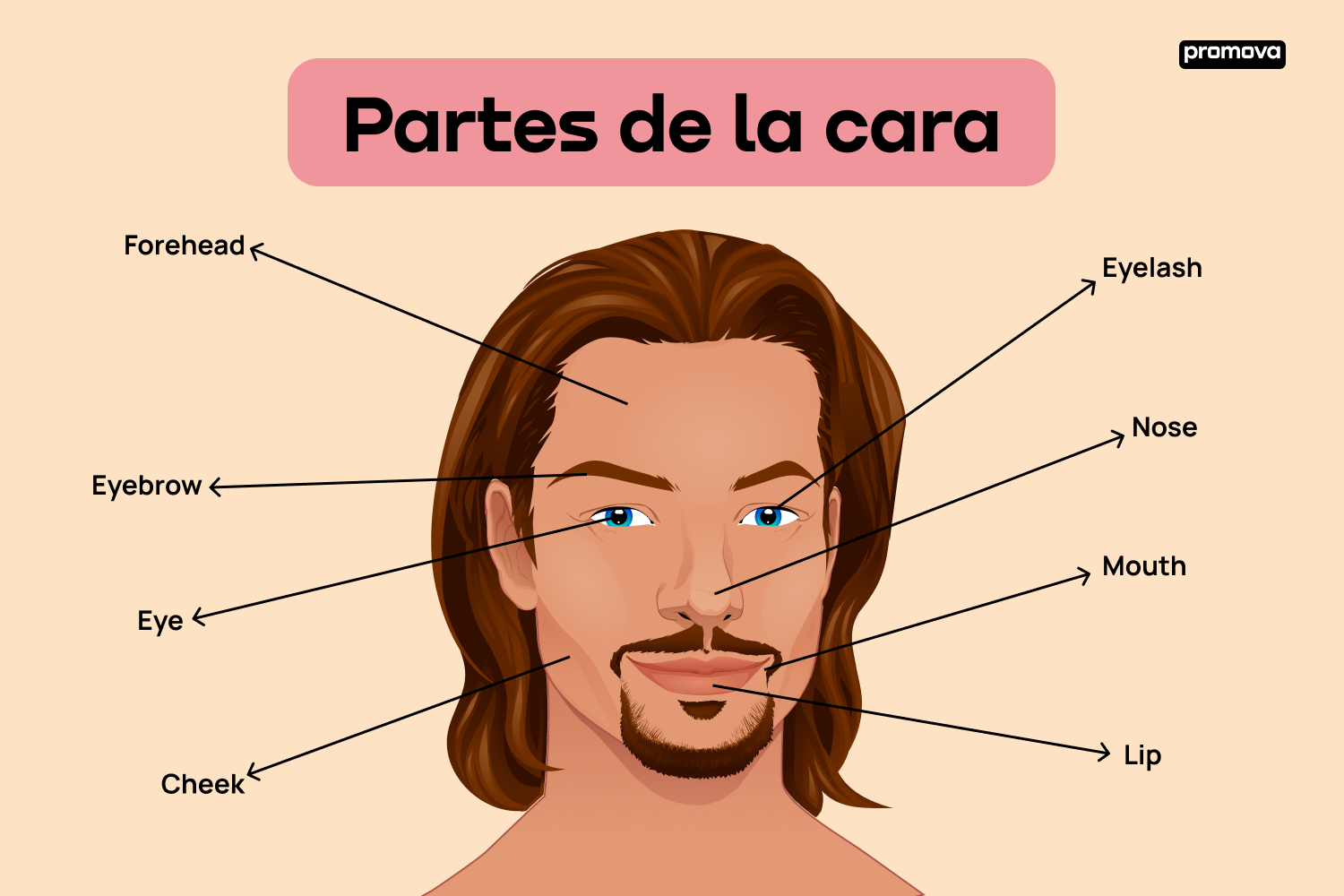
Let's begin by systematically listing the most important parts of the face in English. Pay attention to singular and plural forms where applicable, as this is a common area for learners to make mistakes. Mastering these terms is your first step towards confident communication.
- Face: cara. This is the general term for the front part of your head, from your forehead to your chin.
- Example: She has a friendly face.
- Forehead: frente. The part of your face above your eyebrows and below your hairline.
- Example: He has a high forehead.
- Hair: pelo/cabello. The strands growing on your head.
- Example: She has long, dark hair.
- Eyebrow / Eyebrows: ceja / cejas. The strips of hair above your eyes.
- Example: His thick eyebrows give him an intense look.
- Eyelash / Eyelashes: pestaña / pestañas. The hairs that grow at the edge of your eyelids.
- Example: She applied mascara to her eyelashes.
- Eye / Eyes: ojo / ojos. The organs used for seeing.
- Example: He has bright blue eyes.
- Ear / Ears: oreja / orejas. The organs on either side of your head used for hearing.
- Example: She wore small earrings in her ears.
- Nose: nariz. The part of the face that projects above the mouth, used for breathing and smelling.
- Example: He has a small, button nose.
- Cheek / Cheeks: mejilla / mejillas. The soft parts of the face below your eyes and beside your nose.
- Example: Her cheeks turned red when she blushed.
- Cheekbone / Cheekbones: pómulo / pómulos. The bone below the eye that forms the prominence of the cheek.
- Example: Models often have prominent cheekbones.
- Mouth: boca. The opening in the lower part of the human face, surrounded by the lips, through which food is taken in and sounds are emitted.
- Example: Keep your mouth shut if you don't have anything nice to say.
- Lip / Lips: labio / labios. The fleshy folds that surround the mouth.
- Example: She applied balm to her dry lips.
- Tooth / Teeth: diente / dientes. The hard, bony structures in the mouth used for biting and chewing. (Note the irregular plural!)
- Example: He brushed his teeth after dinner.
- Tongue: lengua. The fleshy muscular organ in the mouth, used for tasting, licking, swallowing, and articulating speech.
- Example: Stick out your tongue!
- Chin: barbilla. The prominent part of the face below the mouth.
- Example: He rested his chin on his hand.
- Jaw: mandíbula. The bone forming the framework of the mouth, holding the teeth.
- Example: He clenched his jaw in anger.
- Neck: cuello. Although technically connecting the head to the body, it's often included when describing the facial region.
- Example: She wore a beautiful necklace around her neck.
For more detailed vocabulary and real-world usage scenarios, be sure to check out our article on Essential English Face Parts: Vocab & Real-World Use.
Beyond the Basics: Describing Faces in English
Once you know the individual parts, the next step is to combine them to describe people effectively. This is where your vocabulary truly comes to life. Think about the adjectives you can use to add detail.
For example, instead of just saying "She has eyes," you can say: "She has striking blue eyes with long lashes." Or, "He has a strong jawline and a small nose."
Let's look at an example description, building on the vocabulary we've learned:
"My aunt has a very expressive face. Her round cheeks often flush when she laughs, and her dark, wavy hair frames her kind features. She has bright, observant eyes, usually hidden behind elegant glasses, and perfectly arched eyebrows. While her nose is small and delicate, her full lips always curve into a warm smile, revealing perfectly aligned teeth. You can often see her resting her chin on her hand when deep in thought, and despite not being strictly a facial part, her graceful neck adds to her overall elegant appearance."
This skill is not only useful for character descriptions in stories or real-life conversations but also for understanding product descriptions for cosmetics, skincare, and even medical contexts. For instance, a beauty cream might promise to reduce wrinkles on your forehead or firm up the skin around your chin and neck.
Mastering English Idioms with Face Parts: Speak Like a Native
One of the most exciting aspects of learning English is diving into idioms. These fixed expressions often don't make literal sense but carry deep cultural and contextual meaning. Using idioms correctly is a hallmark of advanced fluency and will make you sound much more like a native speaker. Many English idioms incorporate parts of the face, making them a natural extension of our vocabulary lesson on Partes De La Cara En Ingles.
Here are some common and highly useful idioms:
- Face to face: Cara a cara. Meeting or dealing with someone directly.
- Example: We finally discussed the issue face to face rather than over email.
- To keep your hair on: Calmarse. To calm down; to not get angry or upset. (Informal)
- Example: Just keep your hair on! It's not the end of the world.
- To keep an eye on something/someone: Estar pendiente de algo/alguien. To watch carefully or look after something/someone.
- Example: Can you keep an eye on my bag while I go to the restroom?
- To have your heart in your mouth: Sentirse muy nervioso/asustado. To feel extremely nervous or frightened.
- Example: When I saw the child run into the road, I had my heart in my mouth.
- To keep a straight face: Reprimir la risa, mantenerse serio. To manage to prevent yourself from laughing or showing emotion in a serious situation.
- Example: It was so hard to keep a straight face during his ridiculous speech.
- To be all ears: Ser todo orejas, escuchar atentamente. To be listening very eagerly and attentively.
- Example: Tell me about your trip; I'm all ears!
- To bite your lip / To bite your tongue: Intentar controlarse y no decir algo. To stop yourself from saying something you want to say, often to avoid offending someone or revealing something.
- Example: I had to bite my tongue to stop myself from criticizing his terrible idea.
- To follow your nose: Seguir la propia intuición. To go straight ahead, or to follow your instincts.
- Example: If you don't know the way, just follow your nose until you see the bakery. (Literal meaning: go straight ahead) / Sometimes in life, you just have to follow your nose and trust your gut feeling. (Idiomatic meaning: follow intuition)
- To be a pain in the neck: Ser algo o alguien que molesta bastante. To be annoying or troublesome. (Informal)
- Example: My little brother can be a real pain in the neck sometimes.
- To get kicked in the teeth: Sufrir un revés, ser tratado mal. To suffer a significant setback or be treated very badly.
- Example: After all his hard work, failing the exam felt like getting kicked in the teeth.
- By word of mouth: De boca en boca. Through people telling each other rather than through advertisements.
- Example: The restaurant became popular by word of mouth.
- Bad hair day: Un mal día. A day when everything seems to go wrong, not just your hair. (Informal and often humorous)
- Example: I spilled coffee, missed my bus, and then realized I forgot my wallet – definitely a bad hair day.
- To have eagle eyes: Tener vista de águila, ser muy observador. To have excellent sight or be very observant.
- Example: The detective, with his eagle eyes, quickly spotted the hidden clue.
Incorporating these idioms into your conversations will not only make your English more colorful but also help you sound more like a native speaker. For more idioms and in-depth explanations, check out Speak Like a Native: English Idioms Using Face Parts.
Practical Tips for Learning and Using Face Vocabulary
Learning new vocabulary requires consistent effort and smart strategies. Here are some tips to help you master the Partes De La Cara En Ingles and their related idioms:
- Label Everything: Print out a picture of a face and label all the parts. You can even do this for yourself using a mirror and sticky notes!
- Self-Description: Stand in front of a mirror and describe your own face using the new vocabulary. "I have brown hair, green eyes, a small nose..."
- Describe Others: Practice describing friends, family members, or even characters in movies or books. Pay attention to adjectives used.
- Flashcards with Pictures: Create flashcards with an image of a facial part on one side and its English name on the other. Include plural forms and an example sentence.
- Contextual Learning: Pay attention to how these words and idioms are used in native English content like TV shows, movies, podcasts, and books. Try to guess the meaning of idioms before looking them up.
- Use Them! The best way to learn is to use what you've learned. Try to incorporate new words and idioms into your daily conversations or writing whenever possible. Don't be afraid to make mistakes; they are part of the learning process.
Conclusion
Mastering the vocabulary for Partes De La Cara En Ingles is a foundational step in your English learning journey. From identifying basic facial features to understanding nuanced idioms, this knowledge opens up a world of descriptive possibilities and enhances your ability to communicate like a native speaker. By actively engaging with this vocabulary and practicing its usage, you'll find yourself speaking with greater confidence and fluency in no time. Keep practicing, keep exploring, and enjoy the richness of the English language!