Unlock Native-Like English: Mastering Idioms Using Face Parts
Learning a new language goes far beyond memorizing vocabulary and grammar rules. To truly speak like a native, you need to delve into the fascinating world of idioms – those quirky phrases whose meaning isn't immediately obvious from the individual words. English, rich with history and cultural nuances, boasts a treasure trove of such expressions, many of which cleverly utilize the essential English face parts.
Understanding these idioms, particularly those rooted in the human face, is crucial for fluent communication. They're not just linguistic embellishments; they offer a window into cultural perspectives and add depth and authenticity to your speech. In this comprehensive guide, we'll explore common English idioms that use various partes de la cara en inglés, helping you not only understand their meanings but also integrate them seamlessly into your everyday conversations.
Building Blocks: Essential Partes De La Cara En Ingles
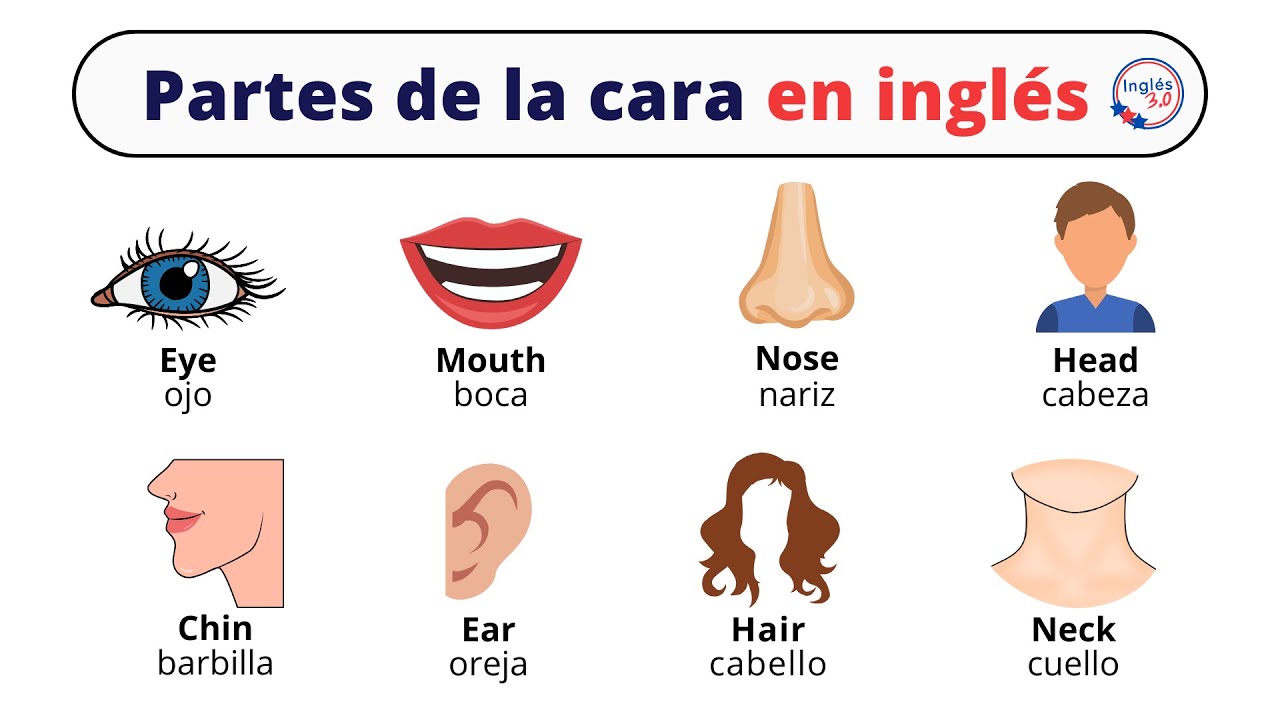
Before we dive into the colorful world of idioms, let's refresh our memory of the basic vocabulary. Knowing these fundamental partes de la cara en inglés is the first step towards understanding how they form the basis for complex expressions. Here are the key components of the face, along with some related terms:
- Face – Cara: The entire front part of the head.
- Forehead – Frente: The area above your eyes and below your hairline.
- Hair – Pelo/Cabello: The growth on your head.
- Eyebrow/Eyebrows – Ceja/Cejas: The strip of hair above each eye.
- Eyelash/Eyelashes – Pestaña/Pestañas: The tiny hairs that grow along the edge of your eyelids.
- Eye/Eyes – Ojo/Ojos: The organs of sight.
- Ear/Ears – Oreja/Orejas: The organs of hearing, located on either side of the head.
- Nose – Nariz: The part of the face used for smelling and breathing.
- Cheek/Cheeks – Mejilla/Mejillas: The fleshy sides of the face below the eyes.
- Mouth – Boca: The opening in the lower part of the face, through which food is taken and sounds are emitted.
- Lip/Lips – Labio/Labios: The fleshy folds surrounding the mouth.
- Tooth/Teeth – Diente/Dientes: The hard, bony structures in the mouth used for chewing.
- Tongue – Lengua: The muscular organ in the mouth, used for tasting, licking, and speaking.
- Chin – Barbilla: The protruding part of the face below the mouth.
- Neck – Cuello: Though not strictly a facial part, the neck connects the head to the body and is often included in related expressions, as we'll see!
These terms are foundational for describing people, understanding medical contexts, or even navigating the beauty aisle. Now, let's see how these simple words transform into powerful expressions.
Decoding English Idioms Using Partes De La Cara En Ingles
Idioms can be tricky because their meanings are often metaphorical, originating from ancient customs or observations that have long been forgotten. However, with a little imagination and context, you can often grasp their essence. Using idioms correctly demonstrates a deep understanding of the language and helps you connect with native speakers on a more authentic level. Let's explore some key idioms that draw on the partes de la cara en inglés.
Expressions Involving the Face, Eyes, and Ears
The face as a whole, along with our primary sensory organs like eyes and ears, are incredibly rich sources for idiomatic expressions:
- Face to face:
Meaning: Directly confronting someone or meeting in person.
Example: After weeks of emails, they finally met face to face to discuss the project.
Insight: This idiom emphasizes direct interaction, often used when a remote discussion isn't sufficient.
- To keep a straight face:
Meaning: To manage to look serious and avoid laughing, even when something is very funny.
Example: It was hard to keep a straight face during the meeting when the boss slipped on a banana peel.
Insight: This highlights an act of self-control, particularly in formal or inappropriate situations for laughter.
- To keep an eye on something/someone:
Meaning: To watch carefully or look after something/someone.
Example: Could you keep an eye on my luggage while I grab a coffee?
Insight: A very common and practical idiom, useful in everyday situations needing vigilance.
- To have eagle eyes:
Meaning: To have excellent eyesight or to be very observant and able to notice small details.
Example: The detective had eagle eyes, spotting the tiny clue that everyone else missed.
Insight: This idiom compares a person's sharp vision or perception to that of an eagle, known for its keen sight.
- To be all ears:
Meaning: To be listening attentively and eager to hear what someone has to say.
Example: Tell me about your trip – I'm all ears!
Insight: This vivid image implies that all of one's senses (specifically hearing) are focused on the speaker, showing genuine interest.
Expressions Involving Hair, Mouth, and Chin
Other specific partes de la cara en inglés also feature prominently in unique idioms:
- To keep your hair on:
Meaning: To calm down; to stop being angry or anxious. (Informal)
Example: Hey, keep your hair on! It's just a small scratch, not a huge dent.
Insight: This informal idiom suggests that one is so agitated they might literally "lose their hair," encouraging them to relax.
- Bad hair day:
Meaning: A day when everything seems to go wrong, not just one's hair. (Informal)
Example: First I spilled coffee, then I missed my bus. Definitely a bad hair day.
Insight: A humorous and relatable idiom that extends beyond actual hair issues to encompass general misfortune. It's often used lightheartedly to explain a rough day.
- To have your heart in your mouth:
Meaning: To feel extremely nervous, anxious, or frightened.
Example: When the plane hit turbulence, I had my heart in my mouth.
Insight: This powerful image conveys intense fear or anxiety, as if your heart has jumped up into your throat.
- To bite your lip/tongue:
Meaning: To make a conscious effort to stop yourself from saying something that you want to say, often to avoid offending someone or to keep a secret.
Example: I had to bite my tongue to avoid criticizing her cooking.
Insight: This idiom is a common parallel to the Spanish "morderse la lengua," highlighting the universal act of self-censorship for social harmony.
- By word of mouth:
Meaning: Through communication from person to person; informally.
Example: The restaurant became popular purely by word of mouth, with no advertising.
Insight: Similar to "boca a boca," this idiom emphasizes the power and authenticity of personal recommendations.
- To follow your nose:
Meaning: To follow your intuition or to go straight ahead without turning.
Example: If you get lost, just follow your nose, and you'll find the main street. (Literal direction) When it comes to big decisions, sometimes you just have to follow your nose. (Intuition)
Insight: A versatile idiom that can mean both literal navigation and metaphorical reliance on gut feeling.
- To get kicked in the teeth:
Meaning: To experience a severe setback, disappointment, or harsh treatment.
Example: After all his hard work, getting passed over for the promotion really felt like getting kicked in the teeth.
Insight: This idiom is quite graphic, conveying the impact of a harsh, unfair, or very negative experience.
The Proximity Principle: Neck Idioms
As mentioned earlier, the neck, while not strictly a face part, is often grouped with the head in common expressions due to its close proximity:
- To be a pain in the neck:
Meaning: To be annoying, troublesome, or bothersome. (Informal)
Example: My neighbor's loud music is a real pain in the neck.
Insight: This widely used informal idiom suggests that something or someone is causing persistent irritation, much like a stiff neck. Remember its informal nature when using it.
Tips for Mastering Face Part Idioms
Learning these idioms is a journey, not a sprint. Here are some actionable tips to help you incorporate them naturally:
- Context is Key: Don't just memorize the idiom and its meaning. Pay attention to how it's used in sentences and real-life conversations. This helps you understand its nuance and appropriate context.
- Visualize: Many idioms using partes de la cara en inglés are highly visual. Try to picture the literal meaning (e.g., a heart in your mouth, someone biting their tongue) to help you remember the figurative meaning.
- Practice Actively: The best way to learn is by doing. Try to use one or two new idioms each week in your conversations, writing, or even when thinking in English. Start with the ones you feel most comfortable with.
- Listen and Read Widely: Pay attention to native speakers in movies, TV shows, podcasts, and books. You'll hear these idioms in action, reinforcing their meanings and usage.
- Don't Translate Literally: This is the golden rule for idioms. Direct translation rarely works and can lead to confusion. Focus on understanding the overall concept the idiom conveys.
For more insights into how face parts contribute to a broader range of expressions, check out our related article: English Face Vocabulary: Words, Idioms, & Practical Examples.
Conclusion
Incorporating idioms that use partes de la cara en inglés into your vocabulary is a significant step towards achieving fluency and sounding more like a native speaker. These expressions add color, depth, and authenticity to your communication, allowing you to convey complex ideas and emotions with concise and culturally rich phrases. By understanding the core vocabulary and then diving into their idiomatic applications, you're not just learning words – you're learning to think and express yourself like a true English speaker. So, start practicing today, and watch your English skills truly shine!